Cliff Walk at Pourville
Stop 1 · First look
First Look
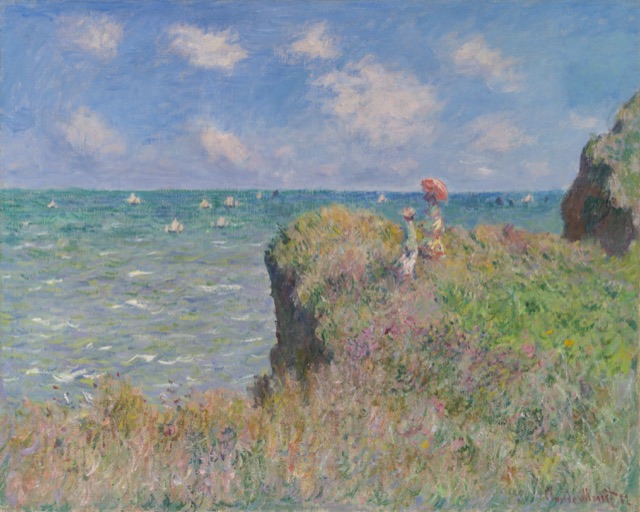
Look at the grass on the clifftop, and then at the sea. Both are made of the same short, curved strokes. Claude Monet painted this in eighteen eighty-two at Pourville, a fishing village on the coast of Normandy. Two young women stand near the edge with a red parasol. They are probably Marthe and Blanche Hoschedé, daughters of the woman who became his second wife. The wind is in everything.
Stop 2 · Technique
Closer Reading
Find the dark rock at the far right edge. X-ray images show that Monet first painted it larger, and then cut it back to balance the sea and the sky. He had a problem to solve in this picture: how to put people into a landscape without breaking its surface. His answer was to paint them with the same touch as everything else. The women’s dresses and shawls are made of the strokes that make the grass, only a little changed, and the same strokes again suggest the swell of the water. Monet had come to this coast in February, at a hard time. His first wife, Camille, had died three years before, and his pictures were selling badly. But he grew to love the place. He wrote home about how beautiful the countryside was becoming, and what joy it would be to show the family all its nooks and crannies. In June they joined him.
Stop 3 · Museum record
Catalog Summary
Two young women stand on a cliff above the sea at Pourville, a fishing village on the Normandy coast where Monet painted in 1882. The same short, curved strokes make the grass, the dresses and the waves, so that everything seems to move in one wind. Oil on canvas, 66.5 × 82.3 cm.
Recorded physical scale: 82.3 × 66.5 cm (32.4 × 26.2 in · 0.82 × 0.67 m).
Stop 4 · Historical Context
Claude Monet (1840–1926)
French painter who led the Impressionists in painting light outdoors, then spent decades painting one subject many times as the light changed.
Impressionism (1860s to 1880s): A French way of painting modern life and landscape quickly, often outdoors, with broken touches of bright colour that catch passing effects of light.
First Look
Look at the grass on the clifftop, and then at the sea. Both are made of the same short, curved strokes. Claude Monet painted this in eighteen eighty-two at Pourville, a fishing village on the coast of Normandy. Two young women stand near the edge with a red parasol. They are probably Marthe and Blanche Hoschedé, daughters of the woman who became his second wife. The wind is in everything.
Closer Reading
Find the dark rock at the far right edge. X-ray images show that Monet first painted it larger, and then cut it back to balance the sea and the sky. He had a problem to solve in this picture: how to put people into a landscape without breaking its surface. His answer was to paint them with the same touch as everything else. The women’s dresses and shawls are made of the strokes that make the grass, only a little changed, and the same strokes again suggest the swell of the water. Monet had come to this coast in February, at a hard time. His first wife, Camille, had died three years before, and his pictures were selling badly. But he grew to love the place. He wrote home about how beautiful the countryside was becoming, and what joy it would be to show the family all its nooks and crannies. In June they joined him.
Catalog Summary
Two young women stand on a cliff above the sea at Pourville, a fishing village on the Normandy coast where Monet painted in 1882. The same short, curved strokes make the grass, the dresses and the waves, so that everything seems to move in one wind. Oil on canvas, 66.5 × 82.3 cm.
About the Artist
Claude Monet (1840–1926)
Claude Monet was born in Paris and grew up in Le Havre, in Normandy, where the painter Eugène Boudin showed him how to paint from nature. He came to Paris in 1859 and, three years later, met Pierre-Auguste Renoir in the studio of the painter Charles Gleyre. In 1869 the two painted side by side on the Seine, with quick, broken brushstrokes.
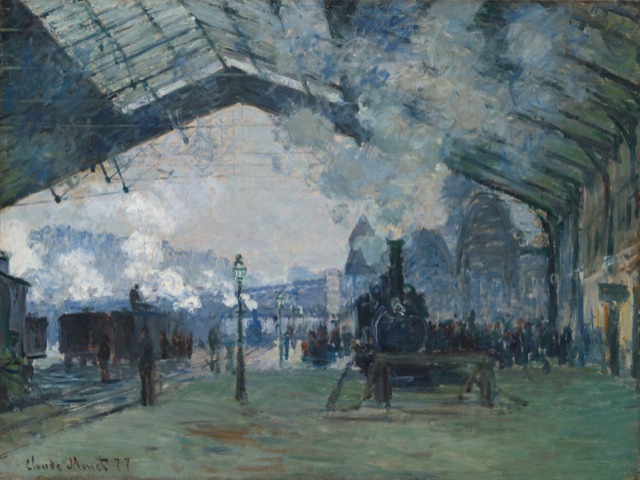
In 1874 Monet, Camille Pissarro and Edgar Degas helped set up a group show apart from the official Salon. One of his pictures there, Impression, Sunrise, gave the group its name, which was first meant as an insult. He worked outdoors, in front of his subject, and often finished a canvas in the studio.
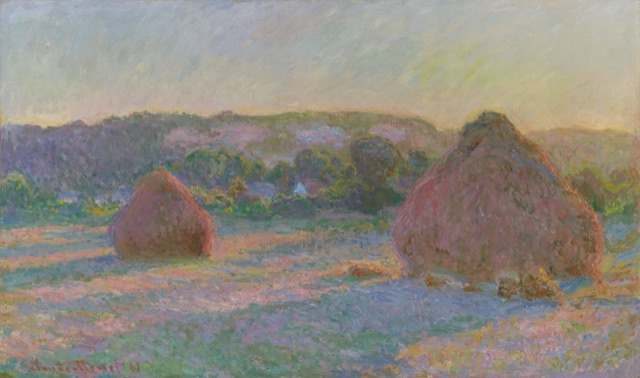
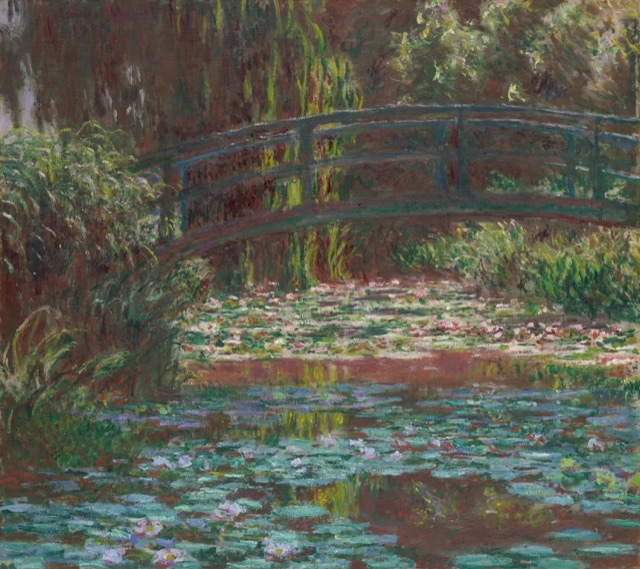
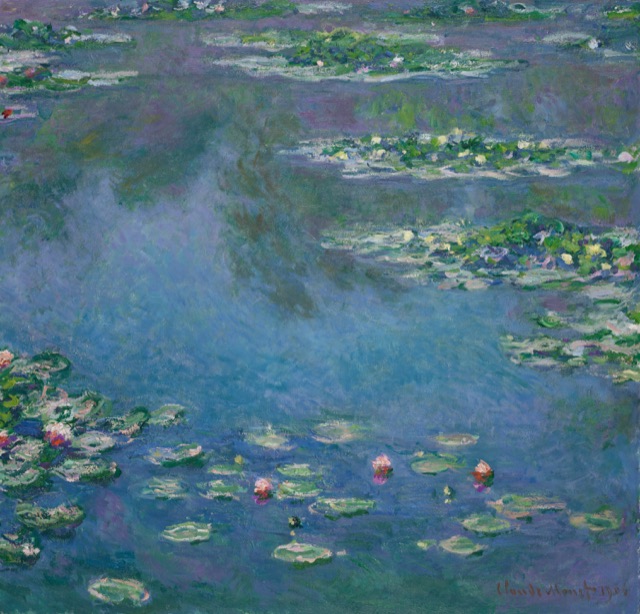
In 1883 he moved to Giverny, north-west of Paris. From 1890 he painted in series, showing one subject, such as stacks of wheat, poplars or Rouen Cathedral, at different hours and seasons. He made a water garden there and painted its water lilies for nearly thirty years, even as his sight failed. He died at Giverny in 1926, aged 86.