The Flowering Orchard
Stop 1 · First look
First Look
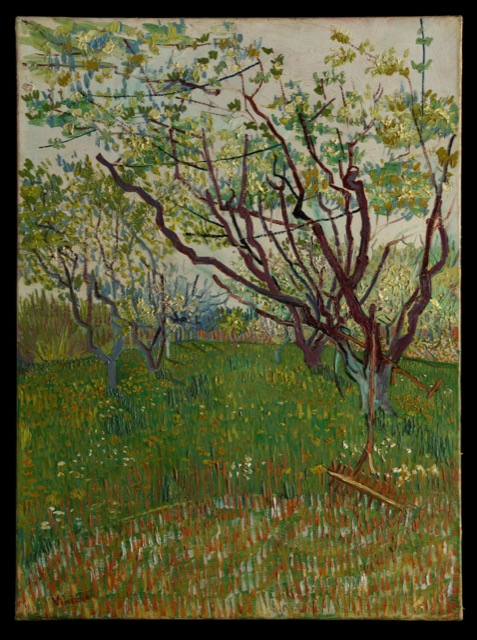
Let your eyes follow the long, angular branches. The Metropolitan Museum relates their shape to Van Gogh’s admiration for Japanese prints. He painted this orchard during his first spring in Arles, in eighteen eighty-eight. Beneath the trees are a rake and a scythe. Those small objects suggest a gardener’s work, even though no person appears in the scene.
Stop 2 · Museum record
Catalog Summary
Van Gogh painted this orchard during his first spring in Arles. The branching forms reflect his interest in Japanese prints; the tools hint at the people tending the trees.
Recorded physical scale: 53.3 × 72.4 cm (21.0 × 28.5 in · 0.53 × 0.72 m).
Stop 3 · Historical Context
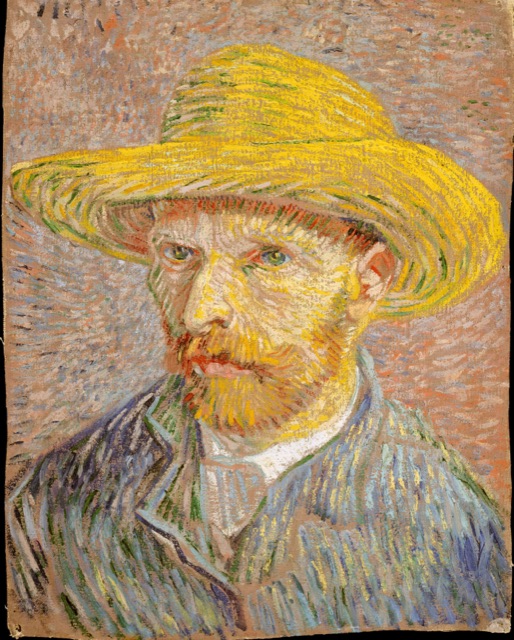
Vincent van Gogh (1853–1890)
Dutch painter who, in ten years of work, used strong colour and thick, visible brushstrokes to put feeling into landscapes, portraits and still lifes.
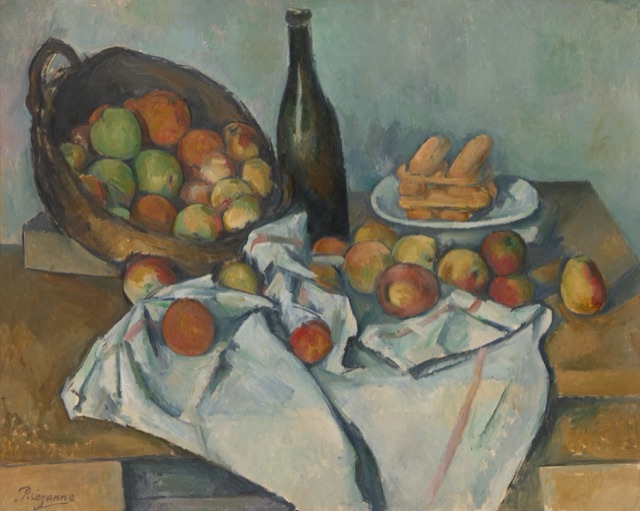
Post-Impressionism (about 1886 to the early 1900s): A later name for painters, chiefly Cézanne, Gauguin, Seurat and Van Gogh, who started from Impressionism around 1886 and each took it somewhere different.
First Look
Let your eyes follow the long, angular branches. The Metropolitan Museum relates their shape to Van Gogh’s admiration for Japanese prints. He painted this orchard during his first spring in Arles, in eighteen eighty-eight. Beneath the trees are a rake and a scythe. Those small objects suggest a gardener’s work, even though no person appears in the scene.
Catalog Summary
Van Gogh painted this orchard during his first spring in Arles. The branching forms reflect his interest in Japanese prints; the tools hint at the people tending the trees.
About the Artist
Vincent van Gogh (1853–1890)
Vincent van Gogh was born in Zundert, in the south of the Netherlands, the son of a pastor. He worked for an art dealer, taught in England and preached to coal miners in Belgium before deciding, at 27, to become an artist. He largely taught himself, beginning with dark pictures of farm workers such as The Potato Eaters.
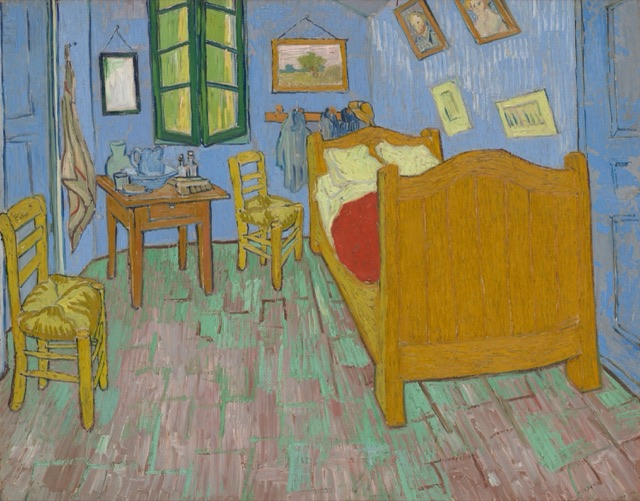
In 1886 he joined his brother Theo in Paris, where the work of Claude Monet and other modern painters brightened his colours. He answered the dotted technique of Georges Seurat with small, even strokes of his own, collected Japanese woodblock prints, and in 1887 painted copies after Hiroshige. In February 1888 he moved to Arles, in the south of France, and painted orchards in blossom, his bedroom and the Sunflowers.
After a crisis in which he cut off his ear, he spent a year in a hospital at Saint-Rémy and made about 150 paintings there. In May 1890 he moved to Auvers-sur-Oise. On 27 July he shot himself, and he died two days later, aged 37.