The Baptism of Christ
Stop 1 · First look
First Look
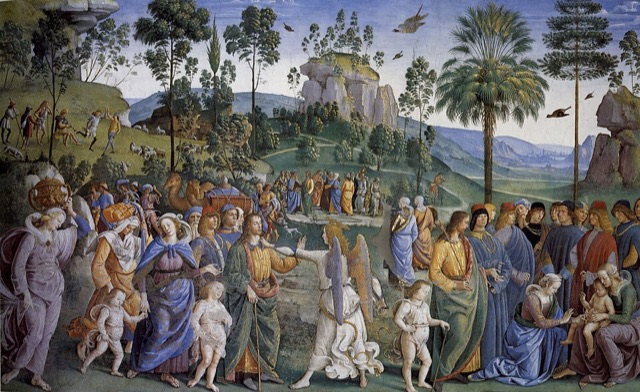
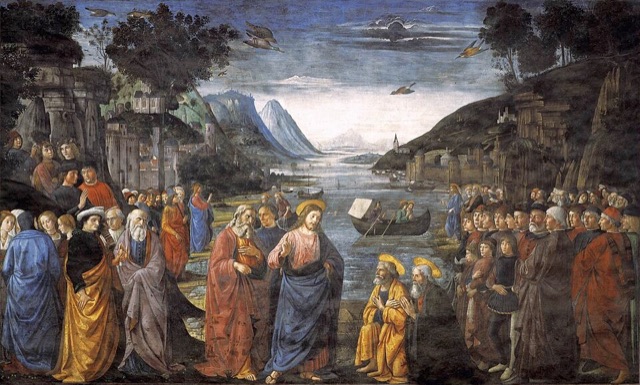
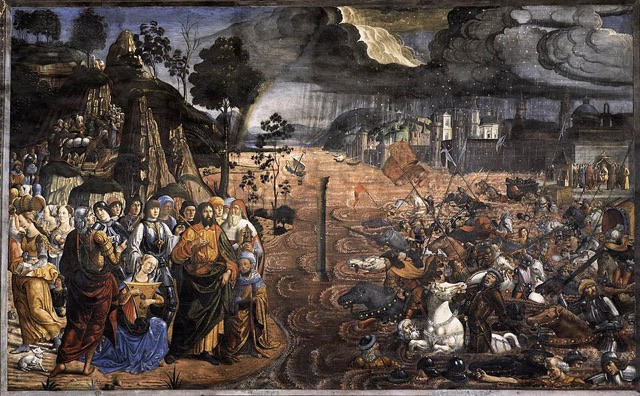
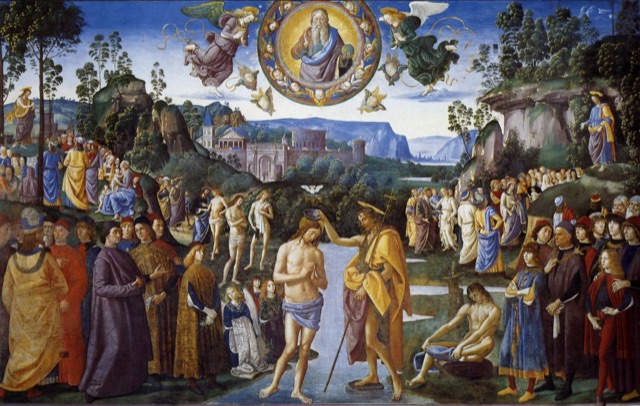
Perugino places Christ’s baptism at the beginning of the surviving Christ cycle. Let your eye move between the central action and the figures gathered beside it. Across the room, the Moses cycle begins another journey. An earlier Nativity on the altar wall once preceded this panel; it was lost when the Last Judgment was painted.
Stop 2 · Technique
Closer Reading
Christ’s baptism begins the surviving north-wall cycle. An earlier Nativity on the altar wall was removed for Michelangelo’s Last Judgment.
Stop 3 · Museum record
Catalog Summary
The first surviving north-wall scene depicts Christ’s baptism. The earlier Nativity on the altar wall was removed for the Last Judgment.
Stop 4 · Historical Context
Pietro Perugino (c. 1450–1523)
Italian painter from Umbria, known for calm, spacious scenes, who was a leading painter of the Sistine Chapel walls and the teacher of Raphael.
Early Renaissance (15th century): The first age of the Renaissance in Italy, roughly the 15th century, when painters in Florence learned to give figures weight and to set them in a space that looks real.
First Look
Perugino places Christ’s baptism at the beginning of the surviving Christ cycle. Let your eye move between the central action and the figures gathered beside it. Across the room, the Moses cycle begins another journey. An earlier Nativity on the altar wall once preceded this panel; it was lost when the Last Judgment was painted.
Closer Reading
Christ’s baptism begins the surviving north-wall cycle. An earlier Nativity on the altar wall was removed for Michelangelo’s Last Judgment.
Catalog Summary
The first surviving north-wall scene depicts Christ’s baptism. The earlier Nativity on the altar wall was removed for the Last Judgment.
About the Artist
Pietro Perugino (c. 1450–1523)
Pietro Vannucci was born around 1450 in Città della Pieve, near Perugia, the city that gave him the name Perugino. He trained in Florence in the workshop of Andrea del Verrocchio, where he met Leonardo da Vinci, Sandro Botticelli and Domenico Ghirlandaio. By 1472 he was registered there as a painter.
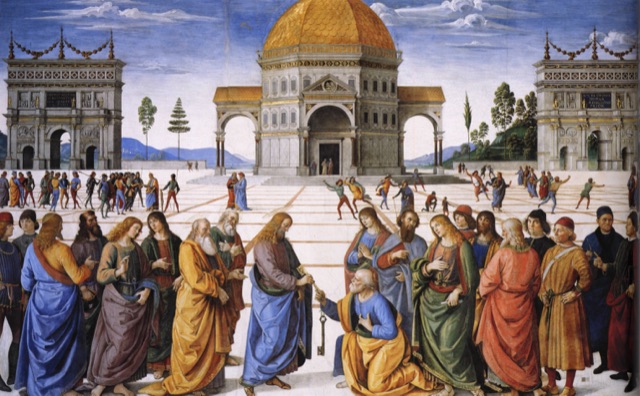
In 1481 to 1482 he worked in Rome on the walls of the Sistine Chapel for Pope Sixtus IV, alongside Botticelli, Ghirlandaio and Cosimo Rosselli. The same four painters made the portraits of popes that stand in pairs beside the windows. His Handing over of the Keys sets its figures before a domed temple flanked by two triumphal arches: a clear, balanced kind of space that his pupil Raphael later took up. Three other works of his, on the altar wall, were destroyed to make room for Michelangelo's Last Judgement.
Perugino ran workshops in both Florence and Perugia and won orders from across Italy and beyond. Raphael worked with him in Perugia in about 1500. His gentle style changed little after the 1490s, and Raphael and Leonardo overtook him. He died of plague at Fontignano, near Perugia, in 1523.